An upright rack roll forming machine is a purpose-built production line that converts coiled steel strip into the perforated, cold-formed vertical columns used in pallet racking, shelving, and storage systems. The upright column—also called the upright post or upright frame column—is the structural backbone of any racking system, and its geometry, perforation pattern, and dimensional consistency determine the load-bearing capacity and compatibility of the finished rack assembly.
一般的なロール成形ラインとは異なり、直立ラック マシンはこのプロファイル ファミリ専用に設計されています。 The cross-section of a rack upright is typically a C-channel, box section, or open-back column with a series of teardrop, square, or round perforations punched at regular pitch intervals—commonly 50 mm or 75 mm—along the web and flanges.これらの穴はビームコネクタの接続ポイントとして機能し、工具を使わずにビームの高さを調整できます。 Producing this combination of precise cold-formed geometry and accurately pitched perforations at production speeds of 15–25 meters per minute requires a machine integrating decoiling, straightening, pre-punching, roll forming, and cut-to-length functions in a single continuous line.
The dimensional accuracy of the finished upright—particularly hole pitch consistency and cross-section squareness—directly determines whether assembled racking passes load testing standards ヨーロッパの EN 15512、北米の RMI、オーストラリアの AS 4084 など。マルチベイ設置では、複数の支柱にわたる公差の積み重ねが重要になります。 a machine producing uprights at the lower limit of dimensional tolerance causes beam connectors to bind or fit loosely, creating both assembly problems and structural risk.
完全な直立ラックロール成形ラインは、それぞれが特定の機能を実行する複数の連続したステーションで構成されています。各ステーションが何を行うのか、どのような品質指標が適用されるのかを理解することは、購入者が機械の仕様を有意義に評価するのに役立ちます。
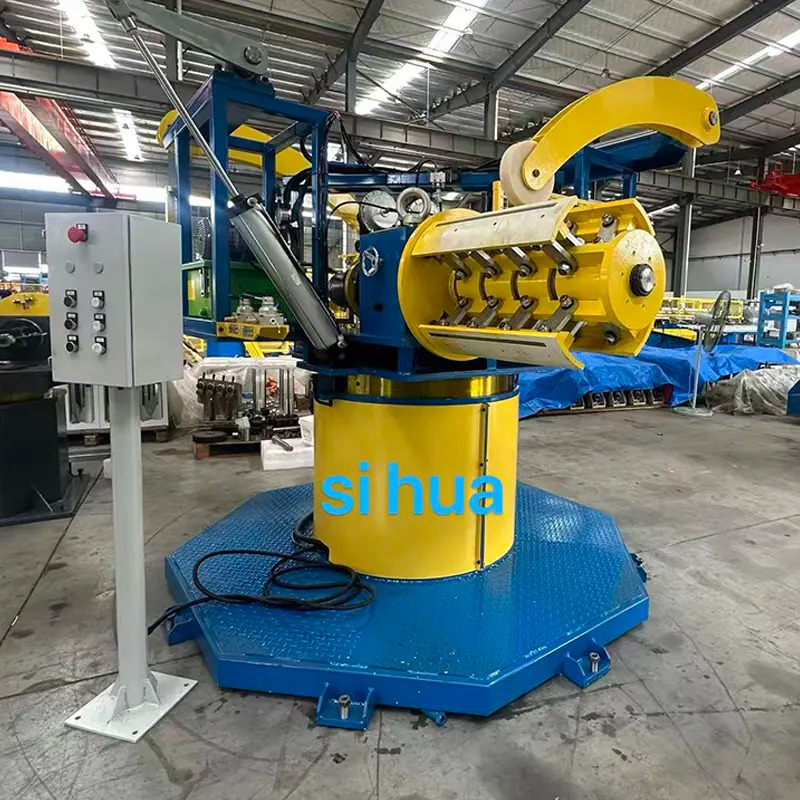
The decoiler holds the steel coil—typically 1.5–3.0 mm thick galvanized or pre-painted steel strip, 80–200 mm wide depending on profile size—and feeds it at controlled tension into the line.油圧拡張デコイラーは、さまざまなコイル内径 (通常は 508 mm または 610 mm) と最大 5 ~ 10 トンのコイル重量に対応します。 The straightener follows immediately, using a series of offset rolls to remove coil set (the natural curvature imparted by winding) from the strip before it enters the punching station. Inadequate straightening produces bowing in the finished upright along its length—a defect that causes fit problems at installation and may disqualify the product from load testing.
プレパンチング プレスは、直立ラック ラインで最も機械的に要求の高いステーションです。 It uses a servo-driven or hydraulically driven die set to punch the teardrop or other connector hole pattern into the flat strip before roll forming begins. Punching in the flat—before the profile is formed—is far more straightforward than punching after forming and eliminates distortion around the holes that post-form punching produces. ここでは穴ピッチの精度が重要な仕様です。最高の機械はピッチ公差 ±0.1 mm を保持します。 一方、低予算の機械では ±0.3 ~ 0.5 mm が許容される場合があり、パレット ラック ベイ全体で目に見えるばらつきが生じます。サーボ制御の送りシステムは、クランク駆動の機械送りよりも高いピッチ精度を実現し、高品質の生産機械に標準装備されています。
金型の材料とメンテナンスへのアクセスは、運用コストに大きく影響します。 Punches and dies for teardrop perforations in 2.0–2.5 mm galvanized steel typically require resharpening every 500,000–1,000,000 strokes depending on steel hardness and coating type.工具鋼 (D2 または同等) パンチとアクセス可能な金型交換システムを備えた機械により、工具メンテナンス サイクル中のダウンタイムが削減されます。
The roll forming mill is the core of the machine—a series of paired roller stations, each incrementally bending the steel strip closer to the finished cross-section.直立ラックプロファイルには、プロファイルの複雑さと材料の厚さに応じて、通常 14 ~ 24 のロールステーションが必要です。 Each station is driven by a common shaft or individual servo motors and contains upper and lower rolls precision-machined from hardened tool steel. The number of forming stations matters because insufficient stations force excessive bend per pass, creating springback, edge cracking, and dimensional instability. Reputable machine builders calculate the required number of stations based on the steel's yield strength and the profile geometry—buyers should request forming sequence simulations or finished profile inspection reports when evaluating machines.
Rack uprights are produced in specific lengths—commonly 1,800 mm to 6,000 mm for standard pallet racking—and must be cut accurately without distorting the formed profile.フライング シアーとストップ アンド カット (ポストカット) システムの 2 つの主なアプローチです。フライングハサミは、プロファイルが動き続けている間、その場で切断するため、より高い生産速度が維持されますが、機械的な複雑さが増します。ポストカットシステムは、切断のために材料を一時的に停止し、機構を簡素化しますが、速度が若干低下します。ラックアップライト生産では、長さの公差が ±1 mm の油圧式またはサーボ駆動のフライング シアーが生産グレードの機械で標準装備されています。丸鋸カットオフ ユニットは、せん断切断で変形した端部プロファイルが残る厚い材料に使用されることがあります。
最新の直立ラック ロール成形ラインは、ヒューマン マシン インターフェイス (HMI) タッチスクリーンを備えたプログラマブル ロジック コントローラー (PLC) によって制御されます。制御システムは、生産速度、穴ピッチ サーボ タイミング、カット長さのカウント、および生産バッチ記録を管理します。 制御システムの品質は日々の生産効率に多大な影響を与えます —intuitive interfaces reduce setup time when switching between upright profiles or lengths, and comprehensive fault diagnostics reduce troubleshooting time during unplanned stops. Siemens、Mitsubishi、Allen-Bradley PLC は、確立されたメーカーの高品質マシンで最も一般的なプラットフォームです。低予算マシンに搭載されている独自のコントローラは、マシンのサプライヤーが限定的なアフターサポートを提供している場合、サービスを受けるのが難しい場合があります。
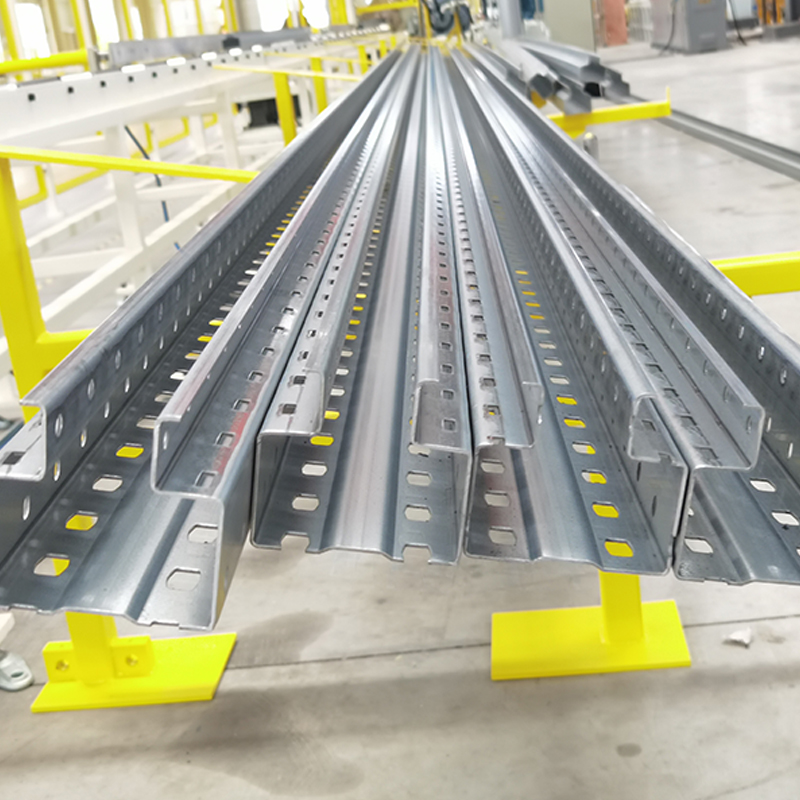
Upright rack roll forming machines are typically built around a specific profile family, though many manufacturers offer tooling change capability to produce multiple profile sizes on a single line.
The open-back C-section with inward-folded lips is the most widely produced rack upright profile globally—it provides high strength-to-material ratios, compatibility with standard beam connectors, and straightforward roll forming. Box-section (closed) uprights offer better torsional stiffness and are specified for heavy-duty drive-in racking and high-bay automated storage systems. 構造柱 profiles with complex multi-bend cross-sections—common in drive-through and push-back racking—require more forming stations and more complex tooling than standard C-section profiles.あるプロファイル タイプに指定されたマシン ラインは、多額の工具投資を行わなければ、別のプロファイル タイプにすぐに適応できるとは限りません。
標準的なラック直立材の厚さは 1.5 mm ~ 3.0 mm で、生産量の大部分を占めるのは 1.8 ~ 2.5 mm です。 Higher-strength steel grades—S350GD, S450GD, or equivalent—allow thinner material gauges to achieve the same load-bearing capacity as thicker lower-strength alternatives, reducing material cost per meter of upright produced.ロール成形機は、生産範囲内で最も硬く最も厚い材料の組み合わせに合わせて指定する必要があります。 forming rolls sized for 1.5 mm mild steel will wear prematurely and lose dimensional accuracy when running 2.5 mm high-strength material continuously. Machine builders should provide roll material hardness data (typically HRC 58–62 for forming rolls in rack production) and estimated roll life figures for the target material specification.
| プロファイルの種類 | 一般的な厚さ | 形成ステーション | 穴パターン | 主な用途 |
|---|---|---|---|---|
| オープンバック帝王切開 | 1.5~2.5mm | 14–18 | ティアドロップ/スクエア | 選択的なパレットラック |
| ボックスセクション(閉じた状態) | 2.0~3.0mm | 18~24 | 円形/長方形 | ドライブイン、ハイベイ自動倉庫 |
| Structural column | 2.0~3.5mm | 20~28 | カスタムピッチ | プッシュバック、ドライブスルー |
直立ラックロール成形ラインは通常、1.8 ~ 2.5 mm の材料で標準的な C セクション プロファイルを毎分 15 ~ 25 メートルで生産します。 At 20 m/min with an average upright length of 3,000 mm, a single-shift line produces approximately 400 uprights per hour—or around 3,000–3,200 uprights in an 8-hour shift, allowing for coil changes, tooling inspections, and minor stops. Annual output for a single-shift, five-day operation approaches 750,000 uprights, which corresponds roughly to the upright requirement for 65,000–80,000 pallet rack bays depending on bay height and configuration.
バイヤーは、機械の速度を指定する前に、現在の注文量と予測される注文量に基づいて必要な生産高を計算する必要があります。 —a machine running at 60–70% of its rated capacity has better tooling life, lower reject rates, and more maintenance headroom than one running consistently at maximum speed.現在の需要に対して 30 ~ 40% 過剰な能力を持つマシンを指定することは、経験豊富なラック メーカーでは標準的な方法です。
ライン構成は工場のレイアウト要件にも影響します。 A complete upright rack line including decoiler, straightener, punching press, roll forming mill, and cut-to-length system typically occupies 20–35 meters of floor length, with 4–6 meters of width required for the line footprint plus clearance for coil handling and finished part stacking. Lines with automated stacking and bundling systems extend the footprint but eliminate manual handling labor at the exit end—a meaningful operating cost consideration for high-volume production.
Machine procurement decisions in roll forming carry significant consequences—a production line represents a multi-year capital commitment, and the difference between a well-specified and a poorly specified machine compounds over thousands of operating hours.以下の評価基準が最も重要です。
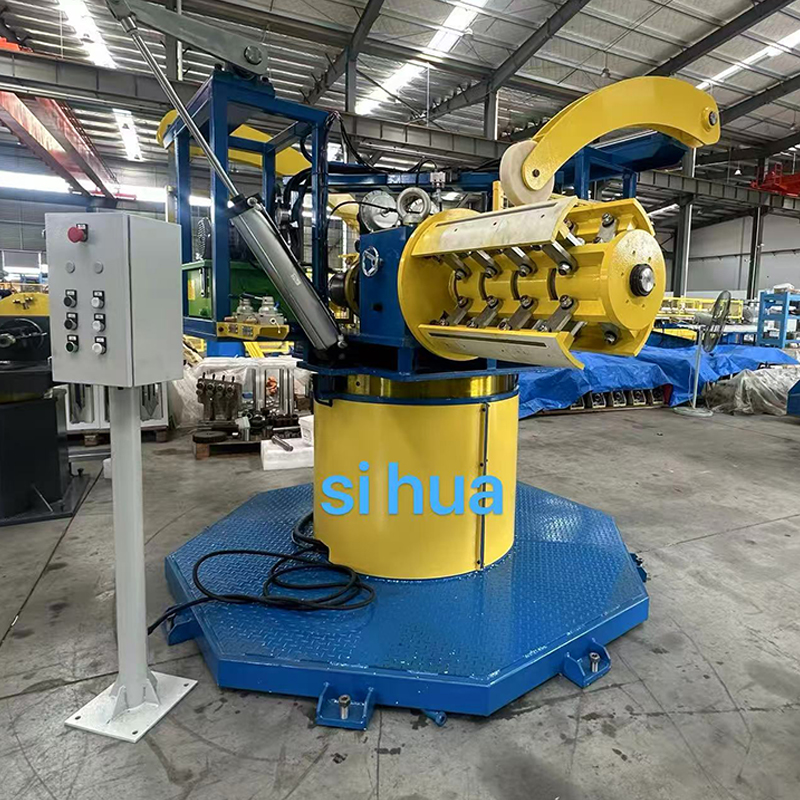
双頭回転式油圧式重荷重デコイラーです。成形機と同期して自動停止でき、油圧による伸縮と自動回転を備えた装置です。 資材ラックは回転して保管できます。ただし、どの位置に回転しても、デコイラーの左側は常に供給側、デコイラーの右側は常に操作側になります。負...
詳細を見る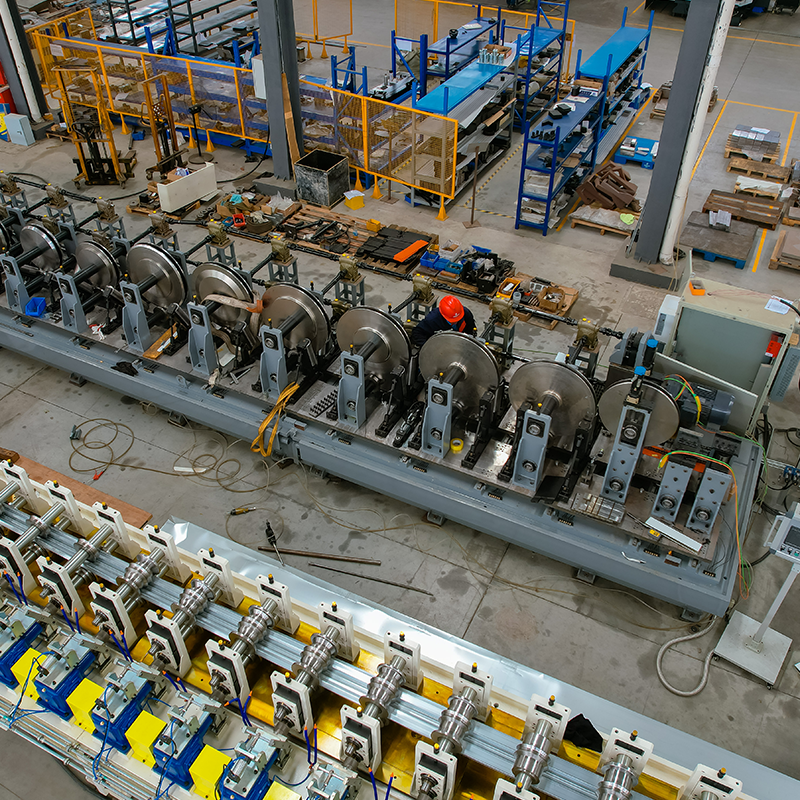
幅広素材シングルデコイラー レベリングマシンと両面小穴開け機 上下のローラーはすべてウォーム減速機に接続されており、成形されたプロファイルがより安定して真っ直ぐにな...
詳細を見る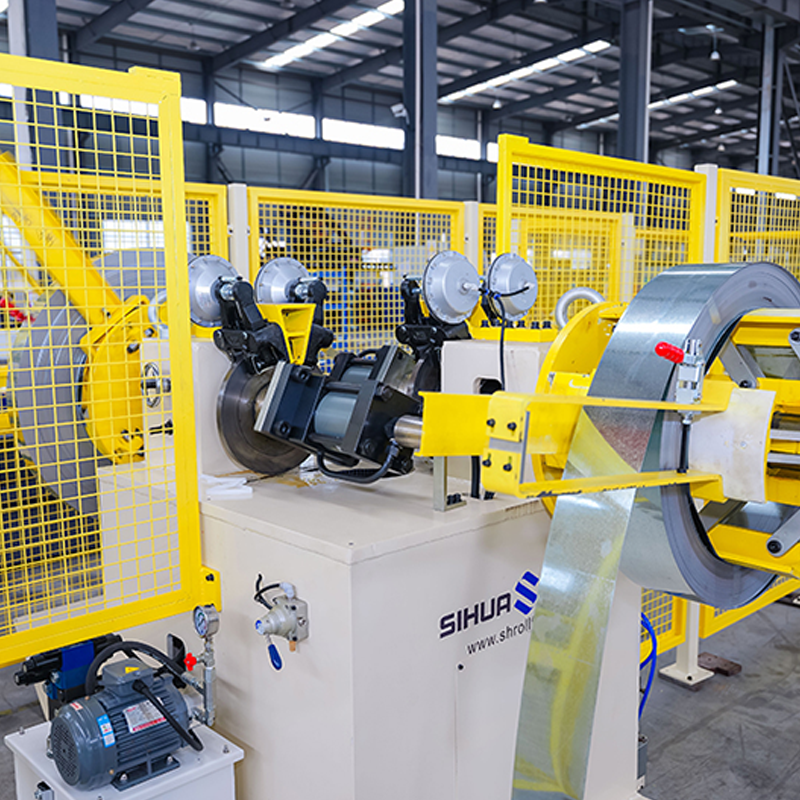
自動回転ダブルヘッド油圧式デコイラー、物質なし検出機能付き、片側あたり 5 トン。 レーザー出力と溶接長さは、さまざまな厚さと幅の鋼帯に対応するために調整可能です。 ...
詳細を見る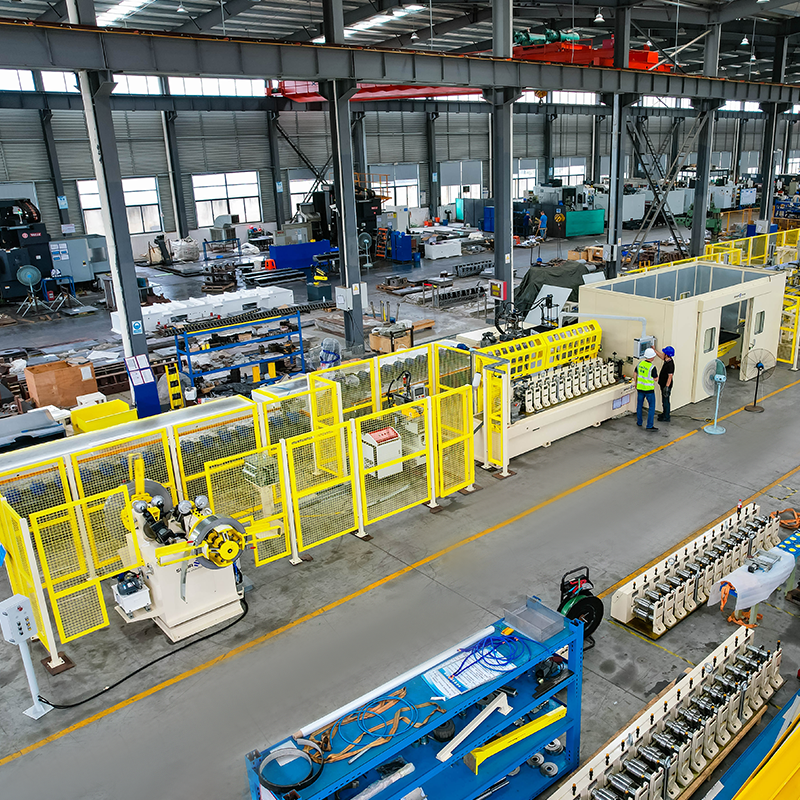
自動回転ダブルヘッド油圧式デコイラー、材料なし検出機能付き、片側あたり 5 トン。 クイックチェンジカセットロール成形機(段取り替え30分)。 機械を停止せずに切断...
詳細を見る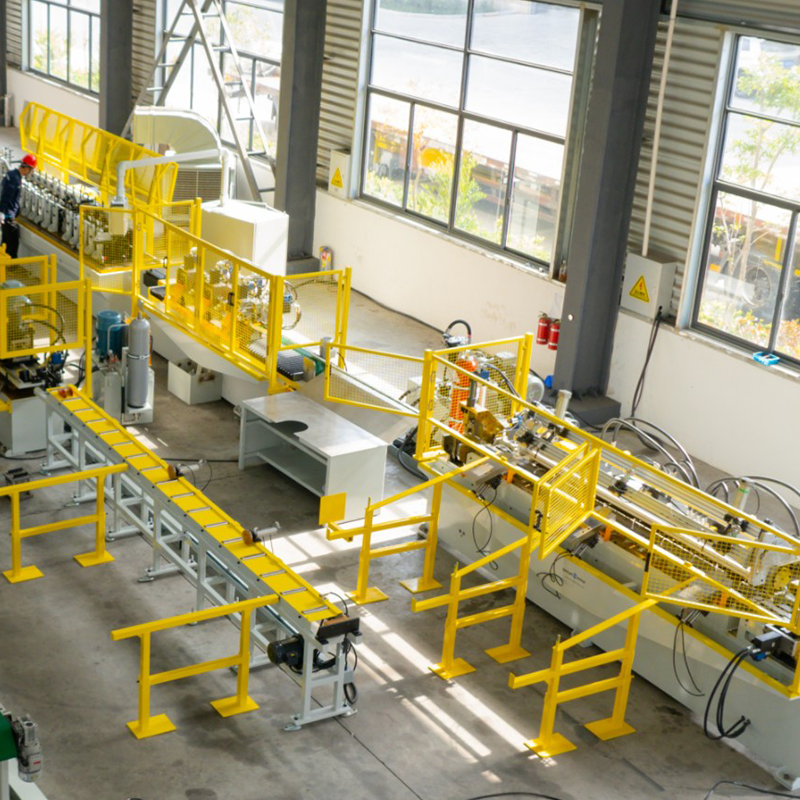
双頭塗装鋼製油圧伸縮アンコイラー、双頭亜鉛メッキ鋼製伸縮アンコイラー、塗装鋼製収納ブラケット、ベルトリダクション。 5メートルのガントリークレーン生産ベースは高精度に一体生産されています。ギアボックストランスミッション。 ...
詳細を見る必要な時はいつでもお気軽にご連絡ください!
お問い合わせ情報
製品
モバイル